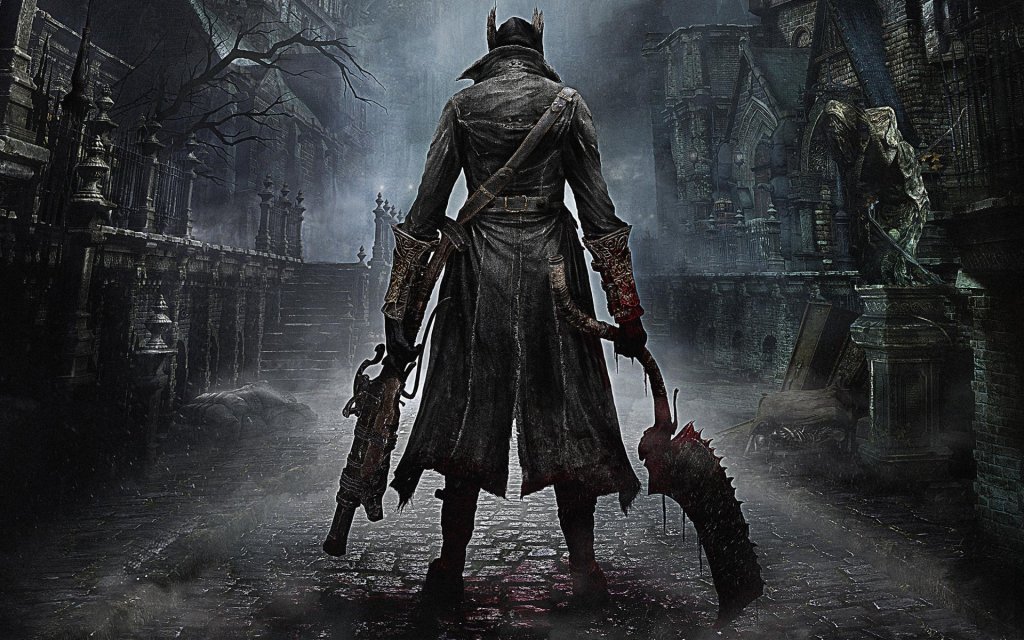
“The night and the dream were long…”
After the resounding success of Demon’s Souls and Dark Souls, many expected FromSoftware to rest on their laurels, churning out sequels and spinoffs to a formula that was rapidly becoming a genre in itself. The term “Souls-like” was born, as countless imitators adopted the same combat mechanics for their own games. However, instead of sticking strictly to their tried-and-true formula, FromSoftware delivered Bloodborne, a game that not only expanded upon the foundation laid by its predecessors but also turned the genre on its head. Nearly a decade after its release, Bloodborne remains a masterpiece, one that challenges players to adopt a new approach and immerses them in an unforgettable world of gothic and cosmic horror.
A Familiar Loop with New Twists
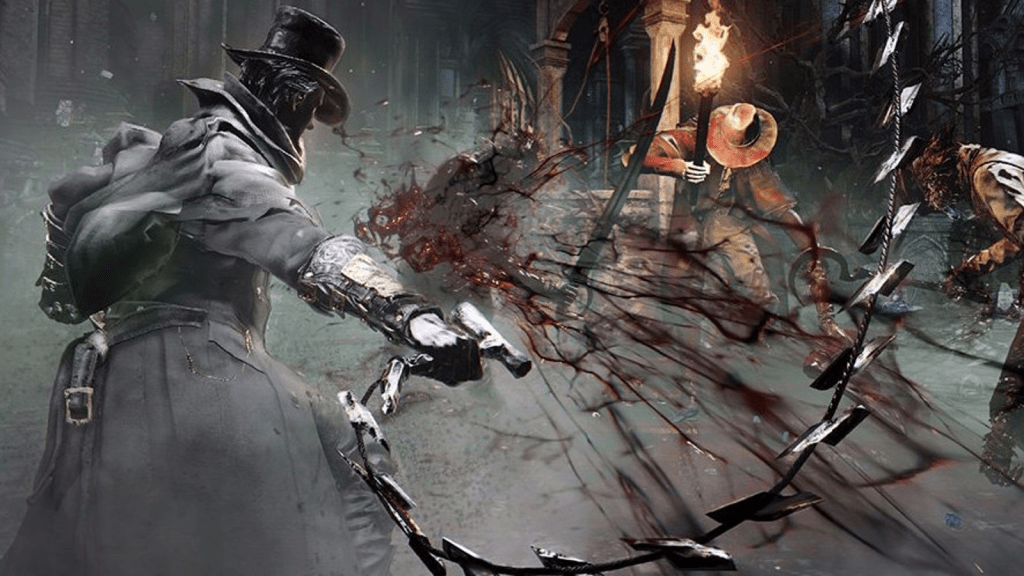
At its core, Bloodborne retains the familiar gameplay loop that fans of the Souls series will recognize: explore the world, engage in intense combat with overpowered enemies, loot for items and gear, level up, and face off against brutal bosses that serve as both gatekeepers and skill tests. However, Bloodborne introduces significant changes that distinguish it from its predecessors.
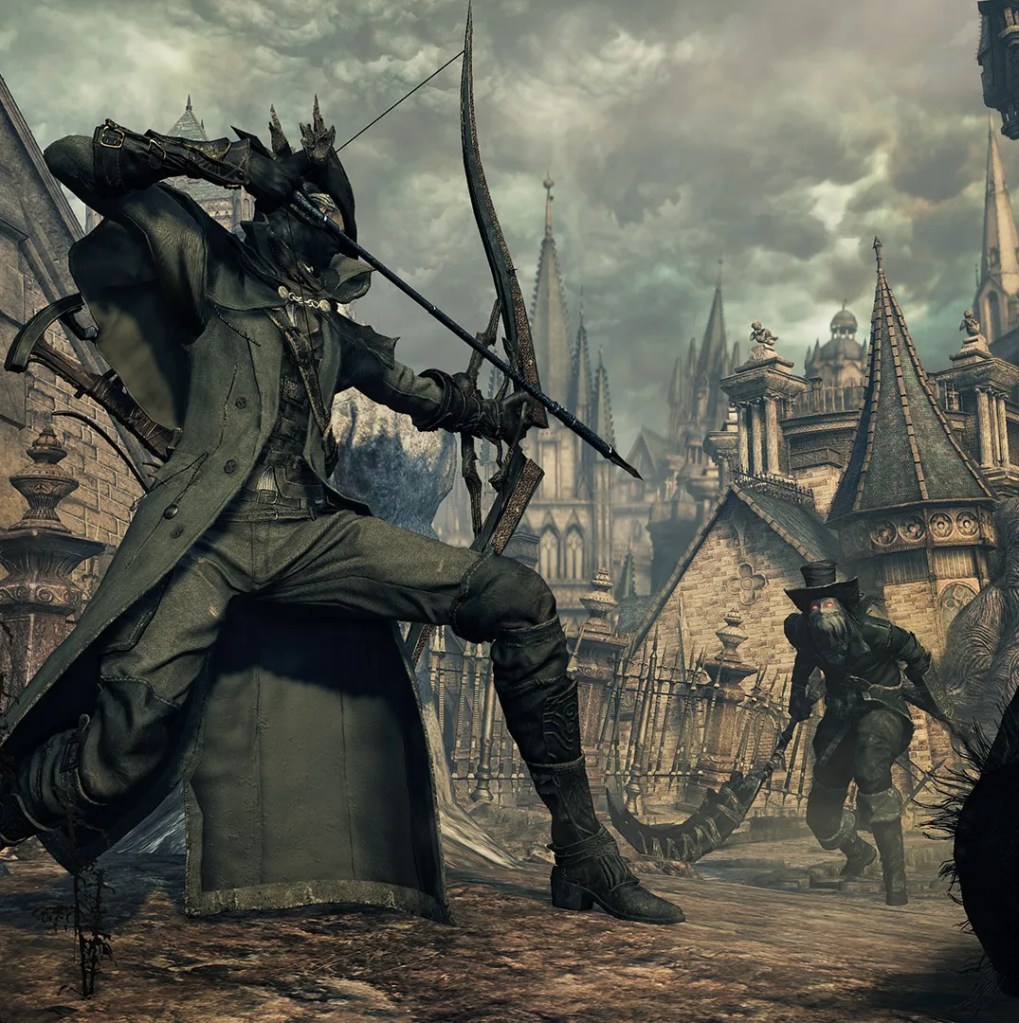
The most notable shift is in the combat mechanics. The shield, a staple in Dark Souls, is nowhere to be found. Instead, Bloodborne encourages an aggressive, fast-paced approach that forces players to stay on the offensive. While players still have standard melee and strong attacks, as well as neat transition animations, they now must time their dodges and rolls with precision. The game rewards quick reflexes and calculated risks. Using firearms like the blunderbuss, players can stun enemies and follow up with devastating visceral attacks. The reliance on precise dodging and tactical play shakes up the formula, pulling the rug out from under veteran Souls players and forcing them to adopt a completely different playstyle.
A World of Gothic and Cosmic Horror
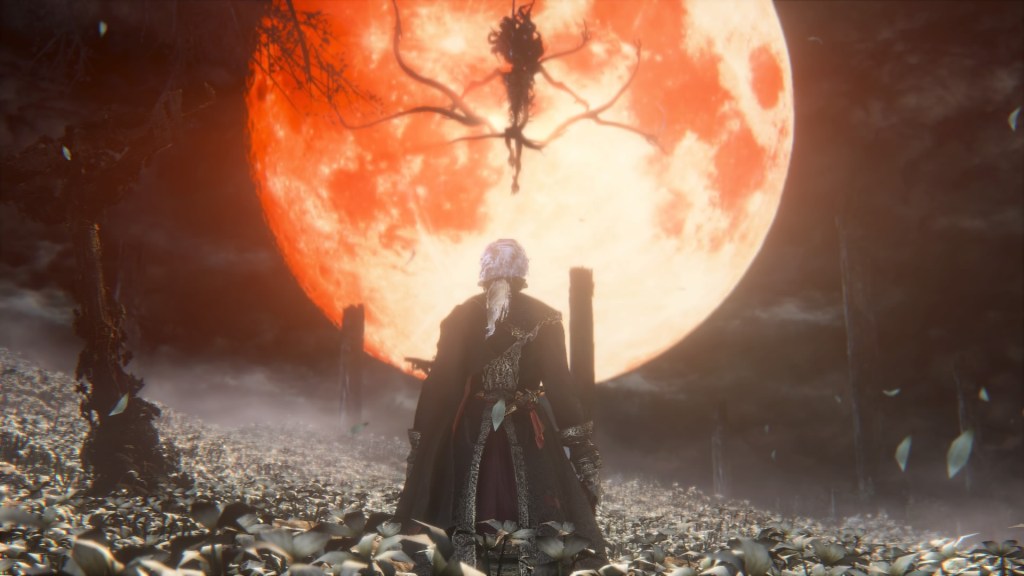
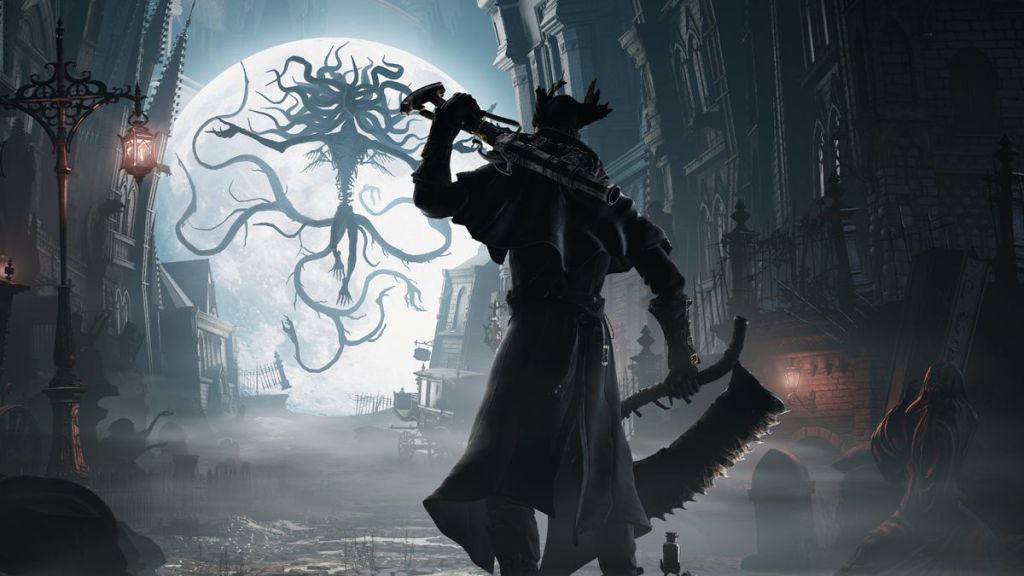
The setting is another significant departure from the medieval dark fantasy worlds of Demon’s Souls and Dark Souls. Bloodborne takes place in Yharnam, a sprawling, decaying city with architecture that evokes Victorian London and late 18th-century New England. It’s a hybrid of classic gothic horror and cosmic horror, drawing inspiration from literary giants like H.P. Lovecraft, Edgar Allan Poe, Bram Stoker, and Mary Shelley. The city’s labyrinthine alleys and cobbled streets are steeped in atmosphere, with every corner hiding some new horror beneath the eerie glow of a blood-red moon.
From the gothic cathedrals to the oppressive atmosphere of the city streets, the world of Bloodborne is as much a character as the monsters that inhabit it. The atmosphere, combined with a haunting sound design, creates a sense of dread and unease that permeates the entire game. Whether you’re navigating the dark, claustrophobic alleys or the sprawling, decayed mansions, the world feels alive with tension and danger. The cosmic horror elements—otherworldly beings, madness-inducing phenomena, and the ever-looming presence of the Great Ones—add another layer of existential dread that elevates the game beyond simple action-horror.
Storytelling Through Ambiguity
One of the most fascinating aspects of Bloodborne is its narrative, which is often misunderstood. Much like Dark Souls, the story is not presented in a straightforward manner. It’s ambiguous and fragmented, with lore hidden in item descriptions, environmental details, and brief NPC interactions. Some might argue that this lack of direct storytelling means the game prioritizes gameplay over narrative, but I believe the opposite is true.
The narrative is as compelling as any game—it’s just suggested rather than spoon-fed to the player. This ambiguity allows for a more personal and subjective experience. The player becomes a detective, piecing together the history of Yharnam, the true nature of the Old Blood, and the horrific consequences of the city’s secrets. Much like a classic horror movie that never fully shows the monster, Bloodborne allows the player’s imagination to fill in the gaps, making the story even more immersive. The lack of hand-holding also harkens back to an earlier era of gaming, where players were expected to “get good” through perseverance, exploration, and personal interpretation.
Fun and Deeply Satisfying Combat
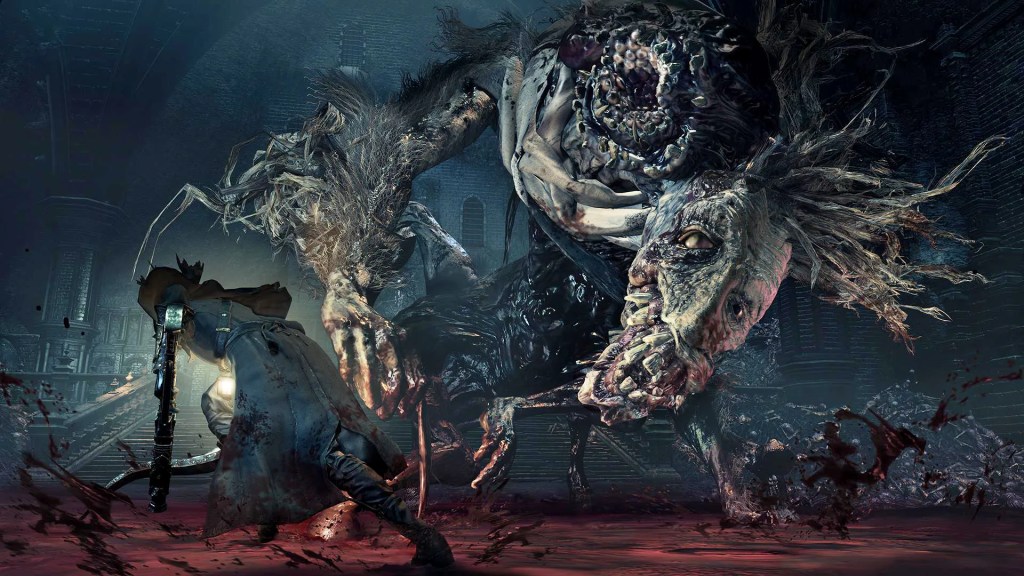
Beyond its story and world, Bloodborne is simply fun to play. As a Hunter, you’re tasked with battling all manner of cosmic and supernatural creatures under the watchful eye of the blood moon. The combat is as challenging as ever, but deeply satisfying. Wielding two-handed axes, hammers, and swords while using a blunderbuss to stun enemies is a blast. Every fight feels earned, and when you finally take down a difficult boss or clear an area, the sense of accomplishment is immense.
Exploration is equally rewarding, as hidden paths, shortcuts, and loot are scattered throughout the world. The game’s RPG mechanics allow for deep customization and progression, letting players tailor their builds and strategies to their preferred playstyle. And while the game’s difficulty is daunting, the system is never unfair—every enemy encounter feels like a puzzle to be solved, where skill, timing, and quick decision-making are the keys to success.
A Masterpiece That Endures
Bloodborne remains one of the most celebrated games of the last decade for a reason. It pushed the boundaries of what FromSoftware had done before, refining their formula while introducing a host of new mechanics, settings, and narrative devices that kept even the most seasoned Souls veterans on their toes. The blend of gothic and cosmic horror, the fast-paced and unforgiving combat, and the open-to-interpretation story make it a unique and memorable experience.
For nearly ten years, Bloodborne has stood the test of time, and its influence can still be felt in many modern games. Whether you’re a die-hard fan of FromSoftware or someone looking for a challenging, atmospheric game, Bloodborne is a must-play. It’s a game that will push you to your limits, scare you, thrill you, and leave you thinking about its mysteries long after the credits roll.
 Fantasy : Swords and Sorcery