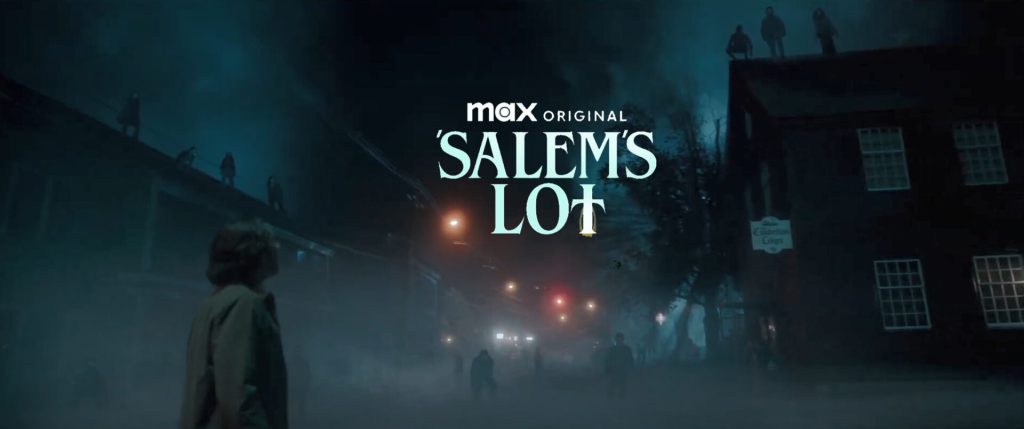
Stephen King’s Salem’s Lot has long been considered one of the author’s most chilling works, blending the timeless terror of vampires with the suffocating atmosphere of a small American town under siege. As the first proper feature film adaptation of the novel (following two earlier miniseries), Gary Dauberman’s 2024 Salem’s Lot had the potential to finally deliver a definitive cinematic version of King’s vision. Unfortunately, what we’ve received feels like a hollow shell of the original story—a rushed, uneven adaptation that struggles to do justice to the source material.

The Plot: A Town Consumed by Vampiric Evil
For those unfamiliar with the story, Salem’s Lot follows Ben Mears (played by Lewis Pullman), a writer who returns to his childhood hometown of Jerusalem’s Lot, Maine, to write his next novel. Haunted by a traumatic experience in the town’s infamous Marsten House, Ben quickly realizes something far more sinister is brewing when a vampire named Kurt Barlow (played by Alexander Ward) and his human servant Richard Straker (Pilou Asbæk) arrive in town. The vampire’s influence begins spreading like a plague, turning innocent townsfolk into bloodthirsty undead.
Ben teams up with a group of unlikely heroes, including high school teacher Matt Burke (Bill Camp), Dr. Cody (Alfre Woodard), young Mark Petrie (Jordan Preston Carter), and Father Callahan (John Benjamin Hickey), to fight back against the growing vampire menace. Tragedy strikes as key members of the group fall victim to the vampires, including Ben’s love interest, Susan Norton (Makenzie Leigh), who is turned by Barlow and eventually staked by Ben. In the end, Ben and Mark destroy Barlow, but they are forced to flee the town, leaving Jerusalem’s Lot to the remaining vampires.
This basic outline closely follows the events of King’s novel, but the film’s execution fails to capture the weight of the story’s emotional beats. The rushed pacing and abrupt editing make the characters feel like hollow figures moving through a checklist of plot points rather than fully realized people caught in a nightmarish situation.
The Origins of Salem’s Lot: King’s Vampire Story for the 20th Century
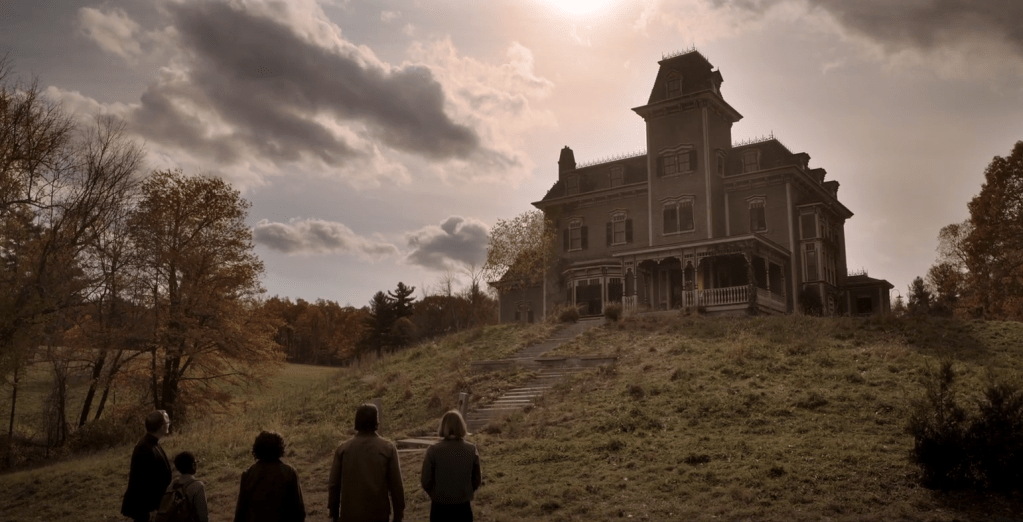
The novel Salem’s Lot, published in 1975, was King’s attempt to bring the gothic horror of Dracula into a modern American setting. The genesis of the story came when King, teaching a course on fantasy and science fiction, wondered aloud what would happen if Dracula came to a small town in the 20th century. After some discussion with his wife, the idea for Salem’s Lot was born—originally titled Second Coming (later changed for obvious reasons). King envisioned the story as a reflection of both his love for vampire mythology and his concerns about the corruption of small-town life, heavily inspired by his experiences during the Watergate scandal and the political climate of the 1970s.
King’s novel wasn’t just about vampires; it was a critique of the decay and moral corruption lurking beneath the surface of American society. By turning a small town’s population into vampires, King tapped into fears of isolation, conformity, and the vulnerability of tight-knit communities to invasive evil. His nuanced take on the vampire legend helped cement Salem’s Lot as one of his most enduring works, influencing countless writers and filmmakers, including Mike Flanagan, whose Midnight Mass drew heavily from King’s novel.
A Troubled Production
The 2024 film adaptation had a long and troubled journey to the screen. Initially announced in 2019, the film was set to be directed by Gary Dauberman, best known for his work on It (2017) and It Chapter Two (2019). With horror maestro James Wan attached as a producer, hopes were high that Dauberman’s experience with King’s material would translate into a faithful and terrifying adaptation. However, the production quickly ran into issues, with delays in filming due to the COVID-19 pandemic and extensive post-production work pushing back the release date multiple times.
Originally slated for a September 2022 release, the film was delayed to April 2023, only to be pushed further due to studio concerns and ongoing production woes. Rumors swirled that the film was drastically re-edited, with a runtime cut down from nearly three hours, removing significant scenes—including an extended opening sequence set in the Marsten House. By the time the film finally landed on Max in October 2024, it had undergone so many changes that it was hard to tell what the original vision had been.
This choppy production history is evident in the final product, which feels like a film that has been trimmed beyond recognition. The rushed pacing, abrupt scene transitions, and lack of character development all point to a movie that was once meant to be something more. Perhaps it was intended as a two-part adaptation like It, or maybe it was even considered for a limited series—either way, the final version feels incomplete.
Flawed Editing and Pacing
The most glaring issue with Salem’s Lot (2024) is the editing. It’s clear that significant chunks of the film were cut or re-arranged, leaving the narrative feeling disjointed and rushed. Scenes end abruptly, characters are introduced and forgotten just as quickly, and the overall flow of the movie is jarring. For a story like Salem’s Lot, which thrives on atmosphere and slow-burn tension, this breakneck pace robs the film of its impact.
Ben’s relationship with Susan, a major emotional arc in the novel, is barely touched upon in the film, and key characters like Father Callahan and Mark Petrie are given little room to grow. The film doesn’t allow us to fully invest in the town’s people before the vampire attacks begin, making the unfolding horror feel weightless. The subtle menace of Barlow and Straker is also undercut by the film’s hurried pacing, reducing them to mere plot devices rather than the terrifying forces of evil they should be.

Some Fun Amidst the Chaos
Despite its many flaws, there are moments in Salem’s Lot that deliver some of the old-school vampire horror fans might be craving. When the vampires start attacking, the film does offer some thrilling sequences, and the group of heroes banding together to fight off the undead is where the movie finds a bit of its lost energy. While these moments are fun, they aren’t enough to save the film from its overall incoherence.
Had the film been allowed more time to develop its characters and build tension, these scenes might have been even more satisfying. As it stands, they offer brief bursts of excitement in a film that feels like it’s constantly trying to catch up with itself.
Missed Potential
In a world where horror television shows like Midnight Mass and The Haunting of Hill House have shown how powerful King’s influence can be when given room to breathe, Salem’s Lot (2024) feels like a missed opportunity. If this story had been turned into a limited series, it could have been a gripping, slow-burn horror masterpiece. Instead, we’re left with a film that feels more like a throwback to 90s TV movie adaptations of King’s works—fun in parts, but ultimately shallow.
Conclusion: A Popcorn Horror That Could Have Been Great
At the end of the day, Salem’s Lot (2024) is a serviceable, if disappointing, vampire film. It offers some popcorn-movie fun with its vampire attacks, but it’s hard to shake the feeling that this could have been so much more. For fans of the novel, or for those hoping for a modern horror epic in the vein of It, this adaptation is likely to leave you feeling underwhelmed. But if you’re looking for a quick and entertaining vampire romp, there’s still some enjoyment to be found here—just don’t expect it to linger long after the credits roll.
 Fantasy : Swords and Sorcery