
Zack Snyder’s Rebel Moon saga, presented in two epic parts, attempts to combine the grandiosity of classic space operas with the gritty, mature themes of R-rated sci-fi. With director’s cuts—Rebel Moon – Chapter One: Chalice of Blood and Rebel Moon – Chapter Two: The Scargiver—Snyder’s vision is laid bare in its entirety, for better or worse.
Overview and Plot
Rebel Moon – Part One: A Child of Fire sets the stage in a distant galaxy dominated by the tyrannical Motherworld and its military force, the Imperium. Kora, a former Imperium soldier turned farmer on the moon Veldt, becomes the reluctant hero as she sets out on a quest to gather a group of warriors to protect her village from an impending invasion. The first part of the saga borrows heavily from Akira Kurosawa’s Seven Samurai, but reimagines the classic tale as a sprawling space opera filled with interplanetary travel and colorful characters.
The sequel, Rebel Moon – Part Two: The Scargiver, continues the story with a focus on backstory and character exposition before culminating in an extended, climactic battle sequence. This second installment attempts to provide deeper context for the universe Snyder has built, delving into the political machinations of the Imperium and the personal histories of its characters.

Production and Reception
Rebel Moon is a product of Snyder’s ambitious imagination, drawing inspiration from various sources including Star Wars, 80’s comic book series Heavy Metal, and classic sci-fi films. However, despite its ambitious scope and impressive visuals, the films have received mixed to negative reviews from critics. While some appreciate the world-building and the visual spectacle, many others have criticized the narrative for being derivative and overstuffed, often feeling like a collection of scenes from better-known works in the genre.
On Rotten Tomatoes, the first film holds a low approval rating, with critics pointing out its reliance on genre clichés and an underwhelming storyline. Similarly, Metacritic scores reflect generally unfavorable reviews, with many highlighting the film’s excessive length and lack of coherence.

A Mixed Bag
In theory, Rebel Moon should be a film that fans of mature science fiction and fantasy would love. For those who enjoy R-rated takes on the Star Wars formula, infused with the raw, explicit sensibilities of Heavy Metal comics, Snyder’s film seems like a dream come true. However, the execution leaves much to be desired. Over the course of the nearly ten-hour runtime between the two director’s cuts, Rebel Moon delivers what it promises on the surface but fails to resonate deeply due to its narrative shortcomings and excessive length.
As a longtime fan of Star Wars and grown-up sci-fi, I approached Rebel Moon with excitement, eager for a darker, grittier take on the space opera genre. I was ready for a sleazy sci-fi film full of explicit sex and violence, and while Snyder certainly delivers on that front, I found myself questioning whether this is truly what I wanted. The director’s cuts, while richer in content, feel bloated and unfocused, with a narrative that struggles to justify its length.
The story of Rebel Moon is essentially a loose adaptation of Seven Samurai, with elements of The Dirty Dozen thrown in, all set against the backdrop of a space opera. This is not a new concept; various adaptations have been made, from The Magnificent Seven to A Bug’s Life, and even Star Wars: The Mandalorian. However, what sets Rebel Moon apart is its sheer length. Unlike its predecessors, this version stretches the familiar tale across six hours of screen time, which is far too much for a story that could be told more effectively in less than half that time.
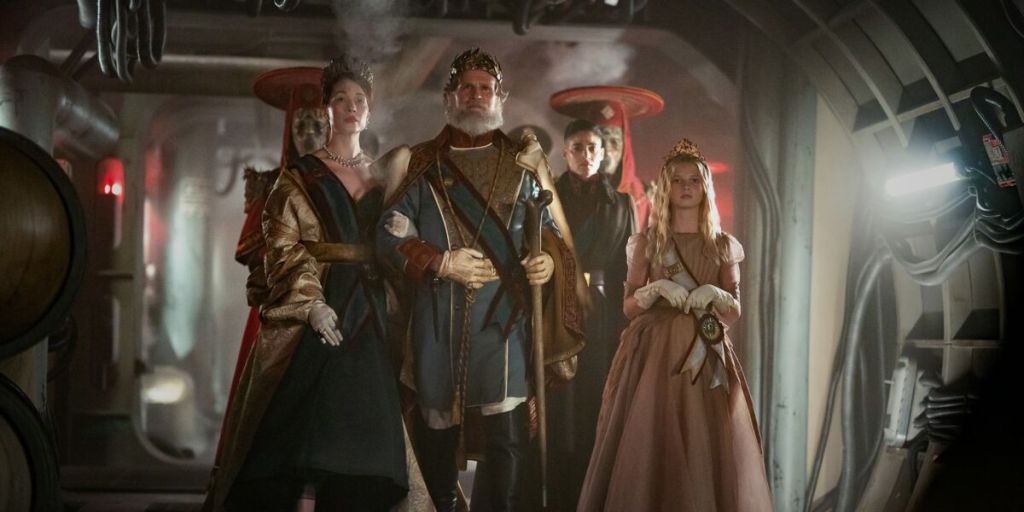
The first part of the saga, A Child of Fire, is arguably the stronger of the two films. It benefits from a sense of momentum as the characters travel across the galaxy to recruit warriors for their cause. However, The Scargiver falters by spending too much time on exposition and backstory, only to culminate in an overly long battle scene that strains credibility. The screenplay is the biggest letdown here; it’s riddled with inconsistencies and questionable logic that make it difficult to take the story seriously.
For example, the premise of a handful of rebels and a village of farmers with tools fighting against a space dreadnought and a battalion of highly advanced soldiers is hard to swallow. Does a galactic empire really depend on grain from a single village to survive? The plot stretches suspension of disbelief to its limits, making it hard not to laugh at the absurdity of it all. A more plausible setup might have involved a stranded Imperial force running low on supplies, or a more isolated conflict on a single planet, focusing on local recruitment rather than interstellar adventures.
Despite its flaws, the R-rated version of the film does have its moments. It features some compelling scenes and intense action, capturing a certain 80s and 90s sci-fi vibe that fans of Heavy Metal and similar works might appreciate. However, these moments are few and far between, often buried under layers of excessive exposition and a convoluted plot that ultimately bogs down the narrative.
Had Snyder trimmed down the runtime and tightened the story, Rebel Moon could have been a fun, if derivative, take on the Star Wars formula. As it stands, the director’s cuts offer a mixed bag—an intriguing but flawed attempt at a gritty space opera that will likely become a guilty pleasure for some and a frustrating watch for others. There’s potential here, but it’s lost in the noise of an over-ambitious production that tries to do too much at once.
For fans of Snyder’s style and those who appreciate the aesthetics of a mature sci-fi epic, Rebel Moon may still hold some appeal. But for those looking for a coherent narrative and well-developed characters, it might be best to temper expectations or hope for a fan-edit that trims the fat and brings out the best in this sprawling space saga.
 Fantasy : Swords and Sorcery