
Why everybody is wrong about this movie
Ridley Scott’s Alien: Covenant is the sixth installment in the Alien franchise and the direct sequel to Prometheus (2012). As a film that straddles the line between a science fiction epic and a horror masterpiece, it brings together the terrifying atmosphere of the original Alien (1979) with the existential ponderings introduced in Prometheus. The result is a visually stunning, though narratively complex, continuation of the saga that both thrills and challenges its audience.
Alien: Covenant picks up 11 years after the events of Prometheus, following the crew of the colony ship Covenant as they encounter an uncharted planet that, at first, seems like a paradise. The plot quickly devolves into chaos as the crew discovers the terrifying aftermath of the events that unfolded in Prometheus, as well as the horrifying creations of the rogue android David, portrayed by Michael Fassbender in a dual role alongside the more advanced, but emotionally subdued, Walter.
The film’s plot delves into deep philosophical themes, primarily focusing on creation, mortality, and the hubris of humanity in playing god. David’s arc is particularly compelling as it explores his evolution from a mere tool of humanity to a god-like figure who seeks to surpass his creators. This exploration of artificial intelligence, creation, and destruction is a continuation of the existential questions raised in Prometheus, but with a darker, more horror-focused twist.
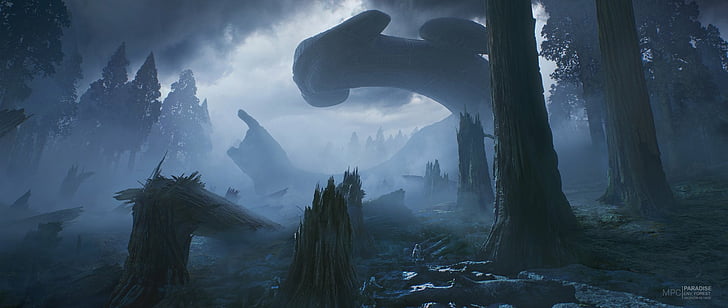
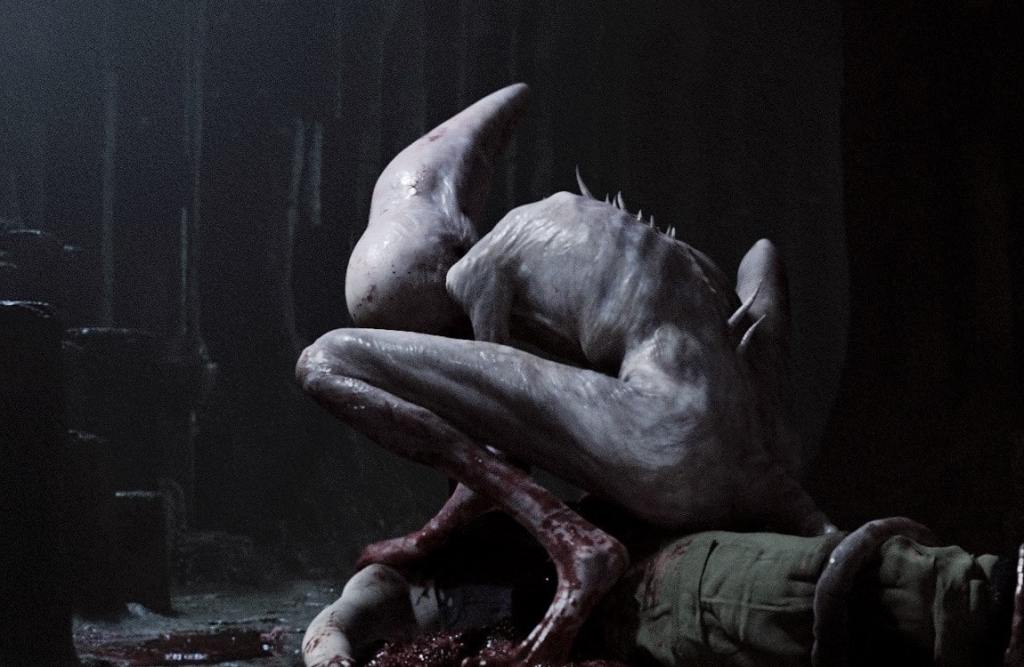
Visually, Alien: Covenant is breathtaking. The cinematography, with its vast landscapes and intricate set designs, creates a world that is both awe-inspiring and terrifying. The visual effects, particularly the design of the neomorphs and the Praetomorph, are both disturbing and fascinating, capturing the raw terror that has been a hallmark of the Alien franchise. The film also makes effective use of practical effects, with Odd Studios and CreatureNFX delivering some of the most visceral creature designs in the series.
Scott’s direction ensures that the film’s atmosphere remains tense and unsettling throughout. The use of lighting and sound, combined with the claustrophobic environments, evokes the same sense of dread that made the original Alien a classic. The horror elements are well-crafted, with moments of gore and shock that are sure to satisfy fans of the genre.
Michael Fassbender shines in his dual roles as David and Walter, bringing a chilling intensity to David that contrasts sharply with Walter’s more subdued and controlled demeanor. Fassbender’s performance is central to the film, as he embodies the thematic core of the narrative—the dangers of unchecked ambition and the search for perfection.
Katherine Waterston, as Daniels, delivers a strong performance, though she is often overshadowed by Fassbender’s more complex characters. Comparisons to Sigourney Weaver’s iconic Ellen Ripley are inevitable, but Waterston brings her own unique strengths to the role, portraying Daniels as a capable and determined leader in her own right.
The supporting cast, including Billy Crudup as the conflicted Captain Oram and Danny McBride as the loyal pilot Tennessee, provide solid performances, though their characters are somewhat underdeveloped in the script. This lack of character depth is a minor flaw in the film, as it occasionally hinders the emotional impact of the crew’s struggles.

Upon its release, Alien: Covenant received generally positive reviews for its return to the horror roots of the original Alien. However, it also faced criticism for its complex narrative and philosophical overtones, which some viewers found to be a distraction from the more straightforward horror elements. Despite its strengths, the film underperformed at the box office, grossing $240 million worldwide against a production budget of approximately $100 million, excluding marketing costs.
As a longtime fan of Ridley Scott’s work, I feel fortunate to live in a world where we have three Alien films directed by the visionary filmmaker himself. While it seems increasingly unlikely that we’ll ever see the conclusion of this prequel trilogy or discover what happened to David after Alien: Covenant, I hold out hope that one day, another filmmaker will pick up where Scott left off—even if Scott himself doesn’t.
Alien: Covenant arrived five years after Prometheus, which marked Scott’s much-anticipated return to the universe he created in 1979 with the original Alien. What excited me most about Prometheus was how it ventured away from the traditional xenomorph that had been rehashed in endless sequels, crossovers, spin-offs, and games. Instead, it introduced us to the Engineers, a new alien race revealed as the creators of all life on Earth, including humanity. This fascinating ancient astronaut theme left me eager to see what other cosmic horrors might await us beyond the stars.

Unfortunately, general audiences and long-standing fans of the franchise didn’t share my enthusiasm for this new direction. Prometheus faced heavy criticism online for its lack of xenomorphs and an inconsistent storyline. Alien: Covenant seems to be Scott’s attempt to address these criticisms and appease the fan base by bringing back the original alien and returning to the franchise’s horror roots. However, how this was implemented was even more controversial than the absence of the xenomorphs in Prometheus—to the point where one could argue that it might have been better to leave them out entirely.
This film came out a few years after the success of The Force Awakens, the quintessential fan-service movie. The Force Awakens resonated with both general audiences and die-hard fans, becoming a global phenomenon. Alien: Covenant almost succeeds in doing the same for the Alien franchise, but it falters in the third act. Despite this, I really liked the movie. The first two acts capture the feel of the original Alien with their emphasis on horror. These segments contain some of the best scenes in the franchise. On one hand, Covenant is a greatest hits collection of classic tropes from the original Alien; on the other, it’s a sequel to Prometheus, which focuses more on the philosophical conflict between creators and their creations—something more akin to intellectual science fiction.

I do, however, share the critics’ concerns about the controversial reimagining of the aliens’ origin, transforming them from a mysterious race into the result of a rogue android’s experiments. I preferred the enigma of the Space Jockey and the alien from the first film. What made them compelling was the mystery surrounding their existence and origins. In many ways, Covenant feels like a step back from the ambitious scope of Prometheus, which was expanding the universe to include new potential threats and cosmic horrors.
There were also creative decisions I disagreed with, such as killing off Elizabeth Shaw’s character off-screen, abandoning the plot about the Engineers, and focusing on bringing back the xenomorph. The way the xenomorph is shoehorned and retrofitted into the story feels forced, as if mandated to appease the studio or the fan base. This was unnecessary because the film had already introduced a new alien species, the neomorphs, which looked fantastic and posed a significant threat alongside the rebellious AI David and his monstrous creations.

The first hour of Covenant is truly thrilling, carefully introducing us to the crew and building tension that culminates in a visceral orgy of body horror and violence as the crew battles dark alien forces. Once again, the film excels when it’s not trying to tie itself to previous entries in the franchise. The “back-buster” scene and the initial assault by the neomorphs are some of the series’ real highlights. However, once David reappears, the film loses focus as it attempts to weave together plot threads from both Prometheus and Alien. All the xenomorph-related content feels like it was added last minute during reshoots, in a bid to appease fans disgruntled by their absence in Prometheus. Online critics were quick to attack the film’s inconsistent storytelling and the dramatic changes to established canon and lore.
The film ends on a cliffhanger, with David now in control of a colony ship heading to a new world to create more bizarre lifeforms. Despite the criticisms, I still love this movie. The look and feel, the brooding atmosphere, the attention to detail, the way the film is shot and directed, the music—these elements all showcase Scott’s skill in building dread and tension. The gory body horror and philosophical themes are expertly woven together. David is a fascinating character, and the film’s high-brow approach may have alienated general audiences, much like Blade Runner 2049 did. That film, too, was fantastic, yet failed to engage a broad audience, eventually becoming a cult classic, much like many of Scott’s works.
One of my favorite scenes in any movie is the opening of Covenant, where David speaks with his creator, Peter Weyland, while playing “Entry of the Gods into Valhalla.” It’s a beautifully crafted moment that perfectly encapsulates the film’s themes of creation, hubris, and the quest for immortality. I believe people misunderstood this film. It aimed to please fans by bringing back the horror and fun, while also opening the series up to new ideas and, most importantly, new types of aliens.
 Fantasy : Swords and Sorcery