The Unsung Masterpiece: The Children of Húrin
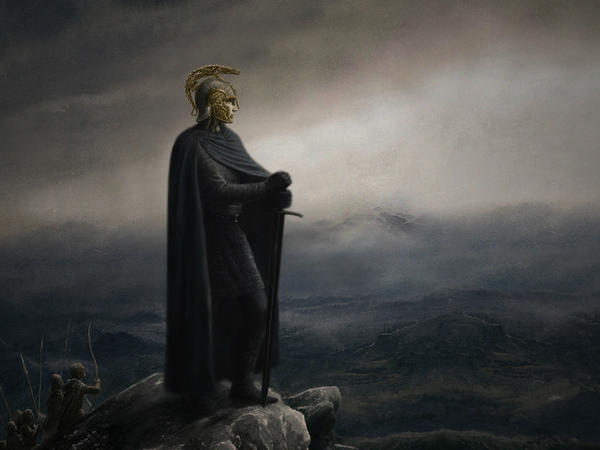
J.R.R. Tolkien’s The Lord of the Rings is arguably the most beloved and well-known fantasy series in the English language. Yet, it surprises me that The Children of Húrin doesn’t receive the same level of attention as The Hobbit or The Silmarillion, nor is it mentioned alongside other big names in fantasy like Harry Potter, The Name of the Wind, Game of Thrones, The Blade Itself, or Gardens of the Moon.
J.R.R. Tolkien’s legacy as a master storyteller of epic fantasy is well-established with works like The Hobbit and The Lord of the Rings. However, The Children of Húrin, published posthumously by his son Christopher Tolkien in 2007, presents a much darker and tragic tale from the First Age of Middle-earth. This novel is one of the three “Great Tales” of the First Age, alongside Beren and Lúthien and The Fall of Gondolin.

A Tale Long in the Making
Tolkien began crafting the story of Húrin’s children in the late 1910s and revisited it multiple times throughout his life. Unfortunately, he never completed the tale. After Tolkien’s death in 1973, Christopher Tolkien took on the immense task of editing his father’s manuscripts, weaving together a cohesive and continuous narrative while ensuring no additional inventions were introduced. The result is a harrowing epic that stands independently from Tolkien’s other works.
Setting and Characters
Set in the First Age, The Children of Húrin unfolds in a Middle-earth populated by Elves, Men, Dwarves, Orcs, and divine beings like the Valar and Maiar. The prime antagonist is Morgoth, the dark Vala, who escapes from Valinor to wreak havoc in Middle-earth from his fortress of Angband. His rebellion and ensuing wars shape the backdrop of the tale.
The central characters are Húrin, a valiant lord of Dor-lómin, and his tragic offspring, Túrin and Niënor. After Húrin is captured by Morgoth in the Battle of Unnumbered Tears, Morgoth curses his family, ensuring that they will suffer devastating misfortunes. This curse drives the narrative, leading to a series of tragic events marked by heroism, sorrow, and doom.
Tragedy and Heroism
Túrin, sent to the Elven kingdom of Doriath for protection, becomes an outlaw after causing the death of Saeros, an advisor to King Thingol. He forms an alliance with Beleg, a loyal elf, and leads a band of outlaws. Túrin’s life is a continuous struggle against Morgoth’s curse, marked by brief moments of triumph overshadowed by overwhelming sorrow.
The tale takes a devastating turn when Túrin inadvertently kills Beleg, mistaking him for an orc, and later falls under the enchantment of the dragon Glaurung. His journey is a tragic spiral as he unwittingly marries his sister Niënor, who, like him, is unaware of their kinship due to Glaurung’s enchantment. The revelation of their true relationship and Niënor’s subsequent suicide lead Túrin to his own tragic end.

Themes and Inspirations
The story delves deep into themes of evil, free will, predestination, heroism, and the noble outlaw archetype. Scholars have noted the influence of various mythological and literary traditions on The Children of Húrin, including the Finnish Kalevala, Norse sagas, and Greek tragedies. Tolkien himself acknowledged these inspirations, drawing parallels between Túrin and figures like Sigurd and Kullervo.
Upon its release, The Children of Húrin received mixed reviews. Critics praised its intense and mature storytelling, comparing it to Greek tragedies, while some found it overblown or inaccessible to new readers unfamiliar with Tolkien’s legendarium. Nonetheless, the book achieved commercial success, debuting at number one on The New York Times Hardcover Fiction Best Seller list and exceeding initial sales expectations.
Despite the varied critical reception, The Children of Húrin is a vital piece of Tolkien’s Middle-earth mythology. It offers a profound exploration of the tragic dimensions of heroism and fate, enriching the larger tapestry of Tolkien’s world. For readers familiar with The Silmarillion and Tolkien’s broader works, it provides a deeply moving and unforgettable narrative, illuminated by Alan Lee’s evocative illustrations.

The Hobbit holds a special place in my heart; it’s like a warm blanket on a winter’s day, a comforting read. While I love The Lord of the Rings for its epic scope, the trilogy can sometimes feel meandering with its detours, musings on pipe-weed, and extensive descriptions of forests and songs. In my opinion, The Lord of the Rings is at its best when it focuses on the main characters and pivotal plot events.
What sets The Children of Húrin apart is its focus and intensity. The story is meticulously trimmed of any excess, leaving an epic tragedy set in Middle-earth’s mystical First Age. The novel’s dark and grim narrative is startling and would have been one of the earliest examples of grimdark fantasy had Tolkien published it during his lifetime.
I loved everything about this book: the story, the characters, the world-building, the dialogue, and the tone. It’s dark, tragic, poignant, sad, inspiring, and an absolute page-turner. Our hero, Túrin, is cursed to endure every kind of misfortune that the dark powers of Middle-earth can throw at him. His journey and how he copes with these adversities make for one of the most compelling stories I have ever read. The brilliance of the tale lies in the interplay between Morgoth’s curse and Túrin’s own character flaws, leading to his tragic downfall.
The Children of Húrin is profound, action-packed, and offers a fascinating glimpse into life during the First Age. The elves are more magical and mysterious, and the villains more powerful and malevolent than Sauron and his minions. The dialogue rivals the best heroic epics of old, such as The Odyssey, The Iliad, The Aeneid, and Nibelungenlied. It draws heavily from the Finnish epic Kalevala, which has influenced many fantasy stories.
This is, by far, my favorite Tolkien story and easily in my top ten fantasy novels of all time. It’s a genuine masterpiece. Despite being a short read, it achieves more in one volume than many modern fantasy authors do in sprawling, ten-book series. (I’m looking at you, Steven Erikson and Brandon Sanderson.) The Children of Húrin proves that a complete, action-packed, and profound story can be told without unnecessary filler.
I was awestruck by this book. Tolkien was a master of his craft, and in my opinion, nobody does it better.
 Fantasy : Swords and Sorcery