Blade Runner and the Epic of Gilgamesh

One of my earliest memories is watching “Blade Runner” for the first time. I had sneaked downstairs to watch it on TV while everyone else in the house was asleep. Captivated by the futuristic cityscapes, flying cars, and dark, foreboding atmosphere, I was spellbound by its timeless music and baffled by its complex storyline. I was only six years old, and the film’s impact on me was profound.
Years later, I read a translation of the “Epic of Gilgamesh” and was struck by the similarities between the two stories. Both narratives delve into the themes of mortality and the nature of being human. They feature anti-heroes: Deckard, a bounty hunter tasked with hunting down and killing replicants, and Gilgamesh, a tyrannical king who abuses his power and authority. Both characters undergo profound transformations, learning about empathy and what it means to be human.

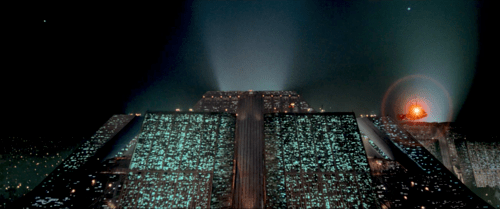
Upon re-watching “Blade Runner,” I noticed additional details. The ziggurat-shaped headquarters of the Tyrell Corporation, the significance of animals, and humanity’s separation and isolation from nature all mirrored elements from the “Epic of Gilgamesh.” The frenemies who develop mutual respect after fighting each other further cemented the connection. This cannot be merely accidental or coincidental. Even the film’s score evokes the timeless essence of ancient days and long-lost nights.
Perhaps the enduring popularity and fascination with both “Blade Runner” and the story of Gilgamesh stem from their exploration of fundamental themes and questions about humanity, our place in the world, and the very nature of existence. Both stories confront the ever-present shadow of mortality, resonating deeply with audiences across time.
“Blade Runner,” a 1982 science fiction film directed by Ridley Scott, and “The Epic of Gilgamesh,” an ancient Mesopotamian epic, are separated by millennia but share profound themes that resonate with audiences to this day. Both stories explore the nature of humanity, the quest for immortality, and the pursuit of meaning in a transient world.
Historical Context and Origins
Blade Runner is based on Philip K. Dick’s 1968 novel “Do Androids Dream of Electric Sheep?” Set in a post-apocalyptic San Francisco, the story follows bounty hunter Rick Deckard as he “retires” rogue androids. The narrative explores the blurred lines between humans and machines in a decaying world.
The Epic of Gilgamesh, written in Akkadian during the late 2nd millennium BC, follows the legendary king of Uruk, Gilgamesh, and his quest for immortality after the death of his friend Enkidu. The epic, discovered in 1849 in the Library of Ashurbanipal, is a foundational text in the study of ancient literature and mythology.
Plot Summaries
Blade Runner
Rick Deckard, a bounty hunter in a dystopian future, is tasked with retiring six Nexus-6 model replicants who have escaped to Earth. These androids, created by the powerful Tyrell Corporation, are almost indistinguishable from humans. Deckard’s journey takes him through a decaying Los Angeles, where he encounters Rachael, a replicant who believes she is human due to implanted memories. As Deckard hunts the fugitive replicants, he forms a bond with Rachael and grapples with the moral implications of his work. The climax of the film sees a confrontation between Deckard and Roy Batty, the leader of the replicants. After a fierce battle, Roy saves Deckard’s life before dying, leaving Deckard to reflect on the nature of humanity and his own existence.
The Epic of Gilgamesh
Gilgamesh, the powerful king of Uruk, is initially depicted as a tyrant. The gods create Enkidu, a wild man, to challenge Gilgamesh. After a fierce fight, they become close friends. Together, they embark on several adventures, including defeating the guardian of the Cedar Forest, Humbaba, and killing the Bull of Heaven sent by the goddess Ishtar. Enkidu’s death profoundly impacts Gilgamesh, who then embarks on a quest to find Utnapishtim, the immortal survivor of the Great Flood, to learn the secret of eternal life. Despite overcoming numerous challenges, including slaying lions and crossing the Waters of Death, Gilgamesh ultimately learns that immortality is beyond his reach and returns to Uruk with a new understanding of his mortality.

Shared Themes
1. The Quest for Immortality
Blade Runner: Rick Deckard’s journey is not explicitly about immortality, but the theme is prevalent through the replicants’ desire to extend their lifespans. Roy Batty, a Nexus-6 model, seeks more life from his creator, mirroring the human fear of death and the pursuit of a longer existence.
The Epic of Gilgamesh: After Enkidu’s death, Gilgamesh is consumed by the fear of his mortality and embarks on a quest to find Utnapishtim, the survivor of the Great Flood, to learn the secret of eternal life. His journey ultimately teaches him that immortality is unattainable for humans.

2. The Nature of Humanity
Blade Runner: The film questions what it means to be human. Replicants exhibit emotions and desires similar to humans, challenging Deckard to reconsider the moral implications of his actions. The Voigt-Kampff test, used to distinguish humans from androids, underscores the difficulty of defining humanity.
The Epic of Gilgamesh: Gilgamesh, a demigod, learns about humanity through his friendship with Enkidu, a wild man created by the gods. Enkidu’s transformation from beast to man and his subsequent death highlight the human experiences of companionship, loss, and the search for meaning.

3. The Search for Meaning
Blade Runner: Deckard’s journey is one of self-discovery. Through his interactions with replicants, especially Rachael, he grapples with his sense of purpose and the ethics of his job. The film’s bleak, dystopian setting reflects the existential crises faced by its characters.
The Epic of Gilgamesh: Gilgamesh’s quest for immortality and his eventual acceptance of mortality lead him to a deeper understanding of life’s value. He realizes that his legacy lies in the lasting achievements and relationships he forges, not in eternal life.

4. Mankind’s Relationship with Nature and Animals
Blade Runner: In a world where real animals are rare and owning them is a status symbol, characters often keep electric animals to maintain the illusion of normalcy. This highlights humanity’s disconnection from nature and the artificiality of their existence. Deckard’s longing for a real animal reflects a deeper desire for authenticity and connection.
The Epic of Gilgamesh: Enkidu, who starts as a wild man living in harmony with animals, represents a natural, uncorrupted state. His transition to civilization and eventual death symbolize mankind’s estrangement from nature and the consequences of this separation.

5. The Corrupting Effect of Civilization
Blade Runner: The dystopian setting of “Blade Runner” showcases a society corrupted by technological advancements and ethical decay. The creation of replicants as a slave race reflects the moral compromises of civilization in pursuit of progress and control.
The Epic of Gilgamesh: Gilgamesh’s initial tyranny as a ruler and his subsequent journey highlight the corrupting influence of power and civilization. His adventures and the lessons he learns through his encounters with Enkidu and the gods illustrate the need for humility and empathy.
6. A Slave Race Created to Serve God-like Masters
Blade Runner: Replicants are created to serve humans, performing tasks deemed too dangerous or undesirable. Their rebellion and quest for freedom parallel the struggle of any oppressed class against their creators, raising questions about the ethics of creating sentient beings for exploitation.
The Epic of Gilgamesh: Enkidu is created by the gods to challenge and ultimately complement Gilgamesh. While not a slave in the traditional sense, his role and the power dynamics between mortals and gods echo themes of servitude and divine manipulation.

7. Learning About Empathy
Blade Runner: Deckard’s journey is marked by his growing empathy for the replicants he is tasked with retiring. The Voigt-Kampff test measures the ability to feel empathy, a trait considered uniquely human. Deckard’s interactions with Rachael and Roy Batty force him to confront his own humanity and moral compass.
The Epic of Gilgamesh: Gilgamesh’s friendship with Enkidu teaches him empathy and the value of human connection. Enkidu’s death profoundly impacts Gilgamesh, making him more compassionate and aware of the fragility of life.
8. The Role of Female Temptresses
Blade Runner: Rachael, a Nexus-6 replicant, seduces Deckard, leading him to question his mission and the nature of his own feelings. Pris, Roy Batty’s lover, also represents the alluring but dangerous nature of the replicants.
The Epic of Gilgamesh: Shamhat, the temple prostitute, seduces Enkidu, leading to his transformation from a wild man to a civilized one. This encounter initiates Enkidu’s journey towards humanity and sets the stage for his friendship with Gilgamesh.
9. Enemies Forming Bonds
Blade Runner: After a climactic battle, Roy Batty saves Deckard’s life, demonstrating empathy and forming a bond that transcends their initial enmity. This act forces Deckard to re-evaluate his views on replicants and humanity.
The Epic of Gilgamesh: Gilgamesh and Enkidu start as adversaries but become inseparable friends after their initial confrontation. Their bond becomes the emotional core of the epic, driving Gilgamesh’s actions after Enkidu’s death.
Narrative Techniques and Style
Blade Runner:
- Visual and Audio Elements: The film’s noir-inspired visuals and Vangelis’s haunting soundtrack create a retro-futuristic atmosphere that emphasizes the themes of decay and existential dread. The futuristic ziggurat-shaped Tyrell Corporation building symbolizes the technological advancements and moral complexities of the world.
- Ambiguity and Interpretation: The film leaves many questions unanswered, particularly about Deckard’s own nature, inviting viewers to explore the ambiguity between human and machine.
The Epic of Gilgamesh:
- Mythological and Poetic Structure: The epic uses repetitive and poetic language, characteristic of ancient storytelling, to convey its themes. The narrative is structured around Gilgamesh’s heroic feats and his transformative journey.
- Symbolism and Allegory: The story is rich with symbolism, such as the Cedar Forest representing the unknown and the journey to Utnapishtim symbolizing the quest for knowledge and understanding.
Cultural Impact and Legacy
Blade Runner: Since its release, “Blade Runner” has become a seminal work in science fiction, influencing countless films, books, and even music. Its exploration of artificial intelligence and human identity continues to be relevant in discussions about technology and ethics.
The Epic of Gilgamesh: Rediscovered in the 19th century, the epic has provided valuable insights into ancient Mesopotamian culture and mythology. It has influenced literary works across centuries and remains a key text in the study of ancient narratives and their impact on modern storytelling.
Despite being separated by thousands of years, “Blade Runner” and “The Epic of Gilgamesh” share timeless themes that explore the essence of humanity, the fear of mortality, and the search for meaning. Through their respective contexts and storytelling techniques, both works invite audiences to reflect on their own lives and the enduring quest for understanding in an ever-changing world.
 Fantasy : Swords and Sorcery