Dune is an epic space opera directed by Denis Villeneuve. It is the first of a planned two-part adaptation of the 1965 novel by Frank Herbert. The events of the film cover the first half of the book. The story is set in the distant future and follows the journey of Paul Atreides as his noble family House Atreides assumes the governorship of the planet Arrakis. The planet is the sole producer of the Spice mélange, a precious resource used for space travel. A rival noble family House Hakkonnen led by the sinister Baron Hakkonen hatches a devious plan to destroy House Atreides and resume control of the planet.

Paul is plagued by strange visions and the revelation that he is the product of an age-old eugenics project aimed at creating a messiah who will lead humanity into a new golden age.
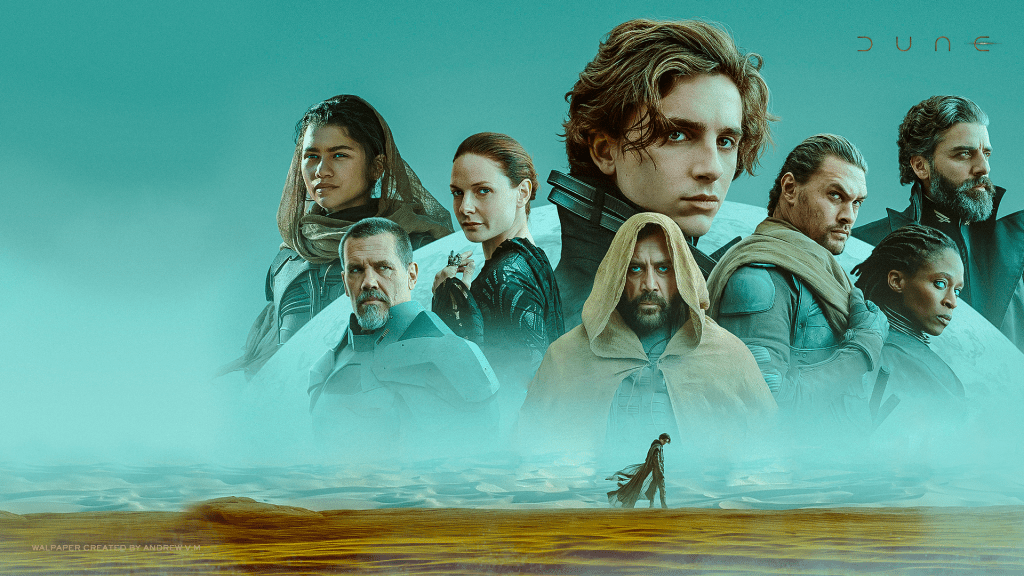
The ensemble cast includes Timothée Chalamet, Rebecca Ferguson, Oscar Issac, Josh Brolin, Dave Bautista, Zendaya, and Stellan Skarsgard.
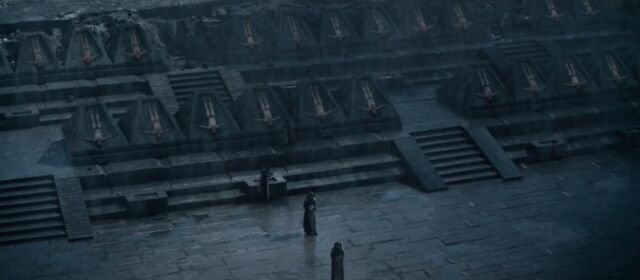
Obviously, condensing the plot of Dune into a paragraph is no mean feat. The first book alone is a sprawling epic set during a distant feudal space age. It’s Game of Thrones meets Star Wars. This is a dark, mature film aimed at an older audience. Another film that reminds me of This adaptation of Dune is the Godfather, where a reluctant, idealistic protagonist gets dragged against his will into the murky world of the family business. In the godfather, it was the mafia and in Dune it was spices production. Another cinematic classic that Dune draws inspiration from is David Lean’s Lawrence of Arabia. In fact, Author Frank Herbert was directly inspired by T.E Lawrence’s Pillars of wisdom and the history of the Middle East when writing his novel. On the surface, Dune’s plot is classic space opera. The story centers on a young, idealistic protagonist destined to lead downtrodden natives against a corrupt and cruel galactic empire. One would be forgiven that this is a re-tread of Star Wars or Avatar, but anyone unfamiliar with the previous films I mentioned is in for a surprise, as Frank Herbert wrote Dune as a cautionary tale about false prophets and demagogues. Herbert was also fascinated by the ecology of desserts, and the Dune story about factions warring over a ecologically fragile planet’s natural resources strikes a chord with modern audiences, perhaps more today than when the book was published.

The book has previously been adapted before by Film Auteur David Lynch. That film bombed at the box office. Lynch’s vision for the film was dark and strange which is why it didn’t appeal to general audiences back in 1984, but it also became a much-loved cult classic for sci-fi nerds like myself, who couldn’t help but admire the bizarre space opera for what it was (Star Wars on acid). The film was hampered by its grim storyline and bad visual effects. Where Stars wars was a fast-paced action adventure with cutting-edge special effects. Lynch Dune was a muddled, slow-paced drama with great costumes and sets, but awful performances and visual effects. In many ways, it was the anti-Star wars, which again is part of why it failed to attract an audience and at the same time gained a cult following.
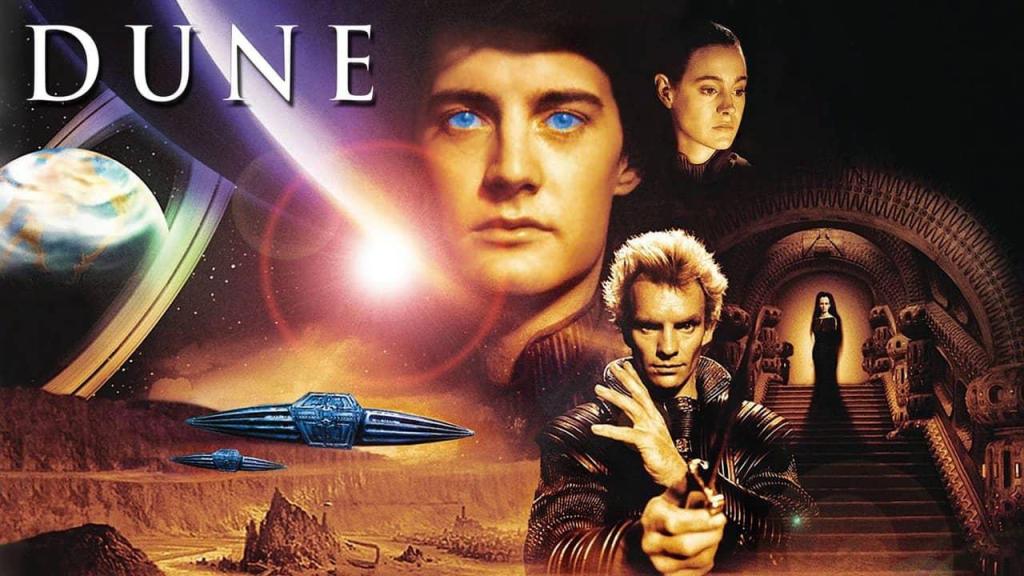
Just like Lynch’s film, The recent revival of the Star Wars franchise hovers like a shadow over This new adaptation of Dune. Villeneuve seems to be using the Empire strikes back as his template for this new version of the story. All the sets, environments, and costumes draw heavy inspiration from Lucas’s Original trilogy. Like Empire strikes back, Dune is an adult take on the monomyth. Villeneuve presents us with a hero’s journey rich in Jungian psychological motifs that were also present in Herbert’s novel.
This is also a fanatically faithful adaptation of the source material. The director’s personal love and devotion to the novel are evident in every frame of this carefully crafted movie.

All the cast are excellent in the roles of each of the main characters. The special effects and minimalist aesthetic is similar to Villeneuve’s previous films like Arrival and Blade Runner 2049, with larger cavernous halls and cold-looking sterile rooms.
The film faithfully follows the events of the first half of the novel, be it a heavily abridged version of it. It was inevitable that many scenes from the book would not make it into this adaptation.
The Harkonnen characters seem to have come off the worst from this cull of the source material. Feyd Rutha does not make an appearance in the film at all, and many of the Baron’s predatory traits have been toned down to avoid courting controversy and secure a rating for a general audience. The same can be said for his henchman Pieter de Vries. His role is reduced to a virtual cameo.Also, the conspiracy subplot involving doctor Yueh has been cut from the narrative to make the story more streamlined and easy for a mainstream audience to follow.
Here I thought David Lynch did a better job of fleshing out the motivations and personalities of the main characters. The threat of violence, both physical and sexual, was more overt in his interpretation of the Harkonen’s. Theirs is a society of apex predators. A perverted realization of survival of the fittest. It’s a shame because the scenes with the Harkonen’s are some of my favorites in the novel. I really enjoyed all the devious schemes, and Machiavellian intrigues that pass between The Baron and sinister agents of the Empire.
Perhaps we will get to see more of this aspect of the story in part two. With a film, a director has to balance the narrative and pace of the story and focus on the central conflict of the story which is Paul’s rite of passage from childhood to young adulthood.I hope that Warner brothers intend to release an extended cut later after part two has been released.

Now, all the above are minor criticisms. Make no mistake. Dune is a great adaptation. The casting is perfect. Rebecca Ferguson and Timothy Chamalet both nail their performances as Paul and Jessica, who are the focus of this story. Jessica, a member of the female Bene Gesserit sect, is like an all-girl Jedi club with mystical, psychic powers. Paul is likable as our young idealistic protagonist. Josh Brolin and Oscar Issac are solid in their supporting roles as arthurian-esque noble knights who serve as role models to young Paul. Stellan Skarsgard is sinister and menacing as Baron Harkonnen. He is channeling Marlon Brando’s Colonel Kurtz from Apocalypse now as a deranged master of strategy. Dave Bastuia is mentally unhinged as the beast Rabban. I was perplexed why all the Harkonens are bald in this adaptation, and I struggle to imagine how a bald Feyd Rutha would work in part two.
All the main scenes in the movie are great. The effects are top-notch as well. I love the big panoramic wide shots of the landscapes and futurist locations. One of the main issues I had as someone who had watched the original Lynch movie is whether there was anything iconic as the famous scene in the 1984 film, when the Emperor conspires with the strange-looking spice guild. I think if I had never seen the original film, I would have appreciated this film more than I did. The thing that disappointed me the most was the abrupt action scenes. This was my biggest criticism with Lynch’s film as the battle scenes and fight scenes were poorly choreographed and hampered by sub par special effects.
The action and effects in this film are much better but are woefully brief and fleeting. Villeneuve is known for doing this in his other films like Blade Runner and Sicario, where long, tense shots explode into sudden bursts of shocking violence. Again, in order to secure a family-friendly rating, the violence has been toned down. I will be honest, I wanted Dune to be along the lines of George Miller’s Mad Max films. Fury Road was a visceral, adrenaline-fuelled thrill ride across a post-apocalyptic wasteland of a dying earth. I personally would have loved to see George Miller do dune, He is able to do weird like Lynch, fast-paced action like Lucas, and art house visuals like Villeneuve.I wanted to be on the edge of my seat, but this film is more meditative and cerebral. I still believe that if Dune is to be a box office draw to global audiences, it needs the fast-paced kinetic action of the Star Wars films.
The brevity of the action scenes never allowed my heart to start pumping. It’s a shame because the build-up to the main battle scene is so well done. The tension is palpable, only to deflate into an anti-climax.

The third act moves on to Paul and Jessica’s encounter with freemen. They seem to have had trepidation about the freemen with this adaptation. In the novel, the freemen are based on Saudi tribes fighting against their oppressors, the Ottoman Empire for control of their oil wealthy lands. In the novel, the culture of the freemen is a product of their tough environment. They are religious fanatics who are willing to engage in acts of terror and violence to achieve their aims. They are a combination of Islamic terrorist and eco-warrior . It’s all very interesting topics to explore, but we don’t get any of that vibe in this movie. I remember a scene from the novel when Gurney first sees the freemen in battle. The warrior does a kamikaze-style attack on a Sadaukar convey, and it turns the cliché of oppressed noble natives fighting a corrupt empire and turns it on its head. You get the impression from this extreme act that there is something not quite right with our ‘good guys’ and that Dune is saying something bigger about humanity as a whole with its story. I am not sure if this theme is being kept as a twist for act two, but it was noticeably absent in part one. The filmmakers seem desperate to avert box office disaster like its predecessor by playing it safe.
The third act climaxes with a duel between Paul and a freemen warrior as part of an initiation rite into the tribe. The scene is pivotal because it is the turning point of Paul’s story as he takes a significant stride toward the dark side of human nature. Paul is based heavily on the real-life war hero Lawrence of Arabia and in David Leans classic adaptation of his life, it’s when Lawrence first kills in cold blood, he is corrupted and destined to descend into guilt-ridden madness and delusions of godhood. The main protagonist of the godfather Micheal Corleone is also fated to fall down a similar downward spiral. I love the fact that Denis Villeneuve understands this aspect of Paul’s character being cinema literate, I was fortunate to appreciate the intertextuality on display as Villeneuve, an unabashed cinephile indulges his passion with every frame. This is not a typical space opera where the good guys wear white and the bad guys were black. Dune is a long novel and only gets denser and stranger with each installment.
I hope with part two they embrace the strangeness of the world Herbet Created. I want them to explore its adult themes without pandering to the mainstream. I guess I am praising this film with faint criticism. Its only half of a two-part story and maybe he was gently breaking us into this strange world before unleashing the full force of his uncompromising vision.
 Fantasy : Swords and Sorcery